Introduction
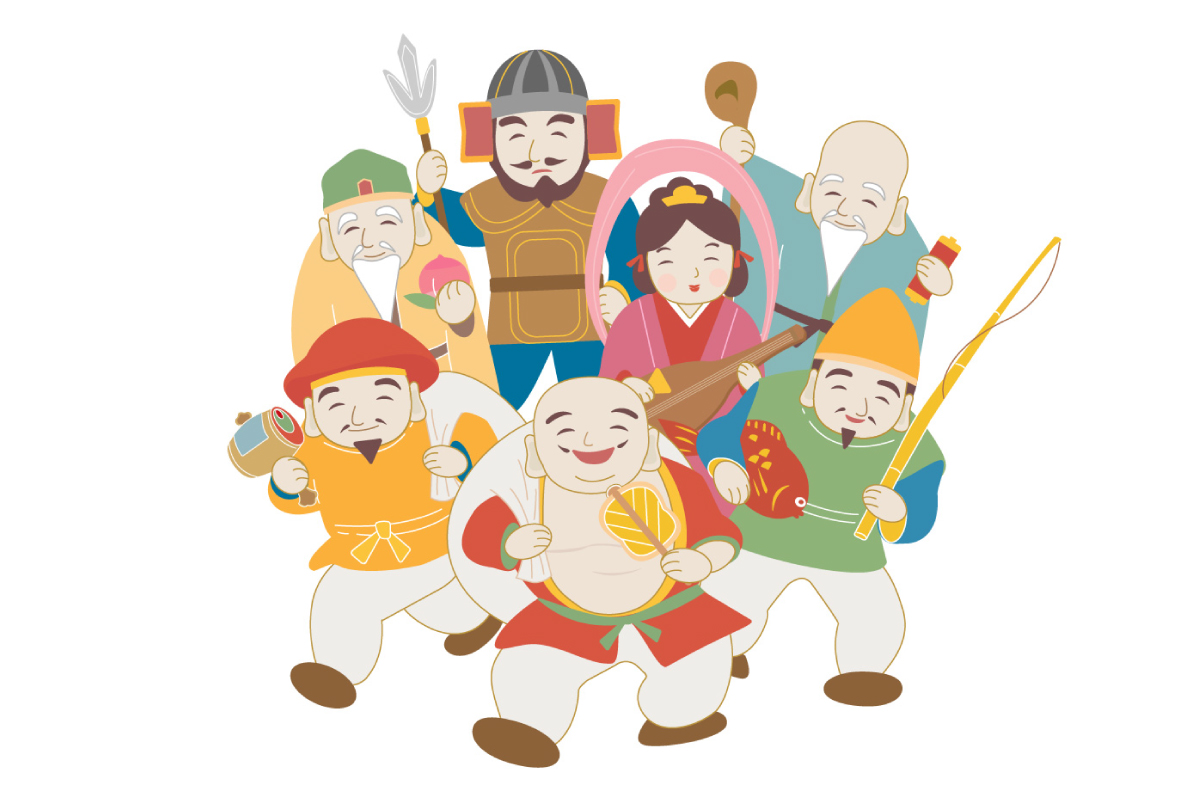
As 2026 begins, many people in Japan look for ways to invite good fortune for the year ahead. One traditional and approachable way to do so is by taking part in a Seven Lucky Gods pilgrimage (Shichifukujin Meguri).
Shinjuku is home to its own route, known as the Shinjuku Yamanote Seven Lucky Gods Pilgrimage, which allows visitors to walk through seven shrines and temples within Shinjuku Ward.
In this article, we introduce each site, the deity enshrined there, and practical information for completing the pilgrimage.
What Is the Seven Lucky Gods Pilgrimage?
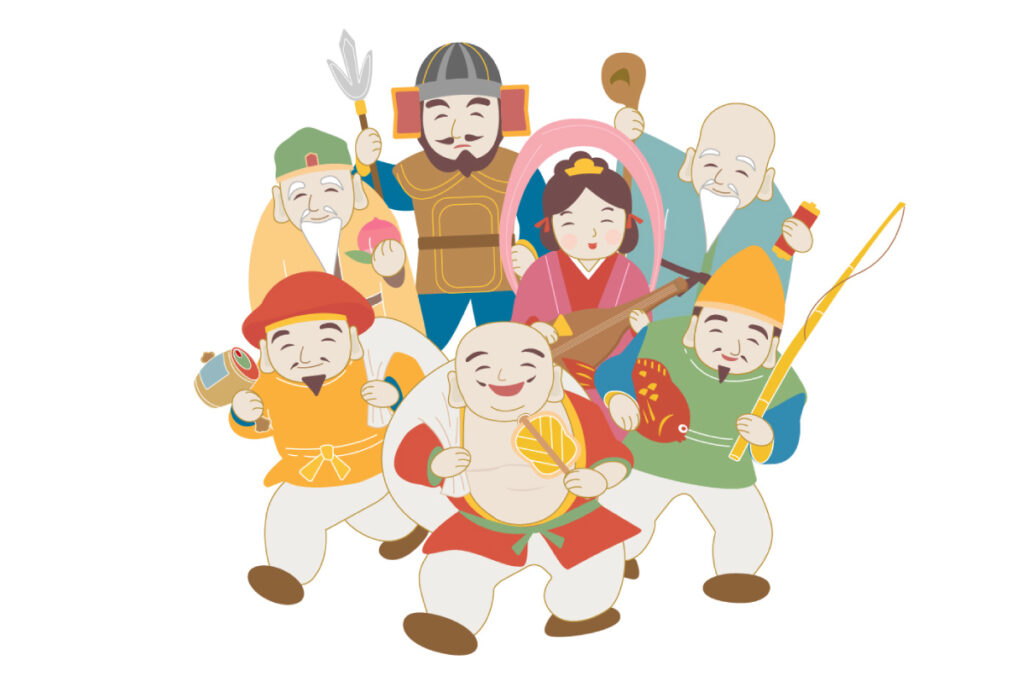
The Seven Lucky Gods pilgrimage is a long-standing Japanese custom in which people visit seven shrines and temples, each enshrining one of the Seven Lucky Gods, to pray for good fortune.
It is said that visiting all seven sites brings blessings in seven different forms.
In Tokyo, several well-known Seven Lucky Gods routes exist, including Shinjuku, Yanaka, Nihonbashi, Asakusa, Meguro, and Ikegami.
Shrines and Temples of the Shinjuku Yamanote Seven Lucky Gods Pilgrimage
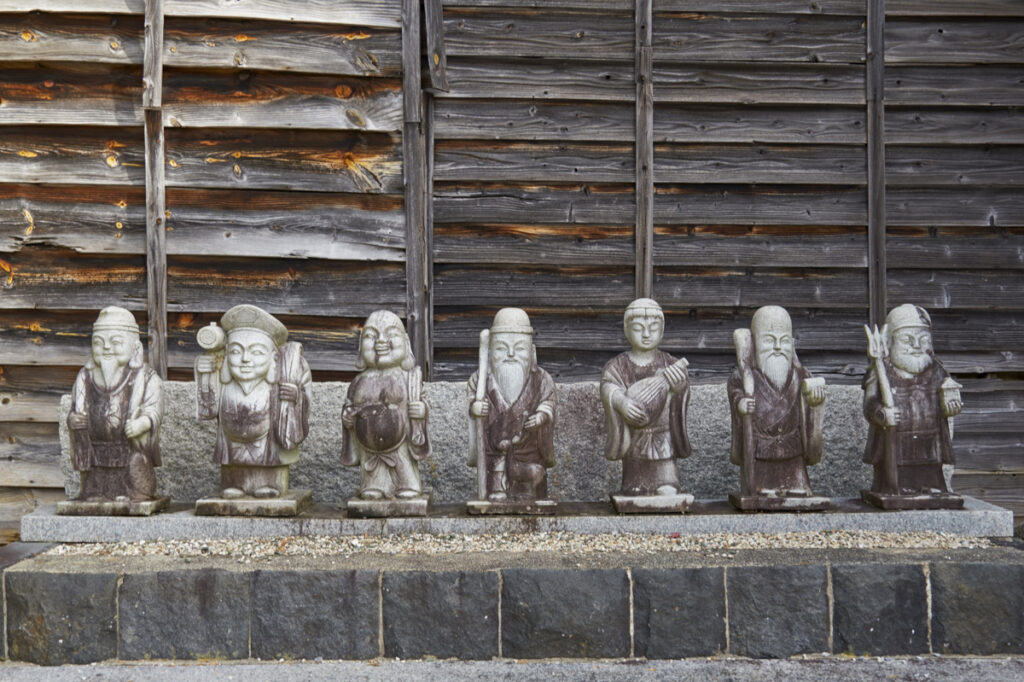
On the Shinjuku Yamanote route, visitors collect stamps (goshuin) at each shrine or temple. Goshuin can be collected in a stamp book or on a dedicated shikishi board, and miniature statues may also be available for purchase.
The seven sites are visited in the following order.
Taisoji Temple (Hoteison) – Shinjuku 2-chome
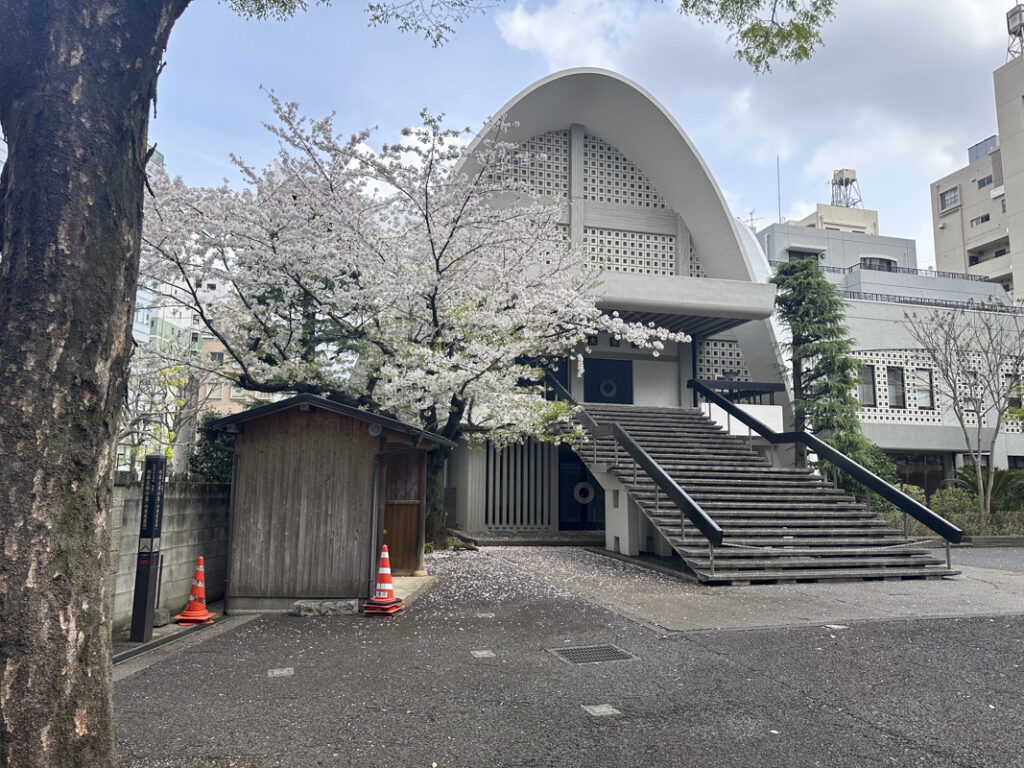
Located near Shinjuku Gyoenmae Station, Taisoji Temple enshrines Hoteison, the god of happiness and family harmony.
Hoteison is believed to have originated as a Chinese Zen monk and is depicted carrying a large cloth bag said to be filled with fortune.
Details
- Name: Jodo Sect Kasumigaseki-zan Honga-in Taisoji
- Address: 2-9-2 Shinjuku, Shinjuku-ku, Tokyo
- Access: 2 minutes on foot from Shinjuku Gyoenmae Station
Inari Kio Shrine (Ebisu) – Kabukicho
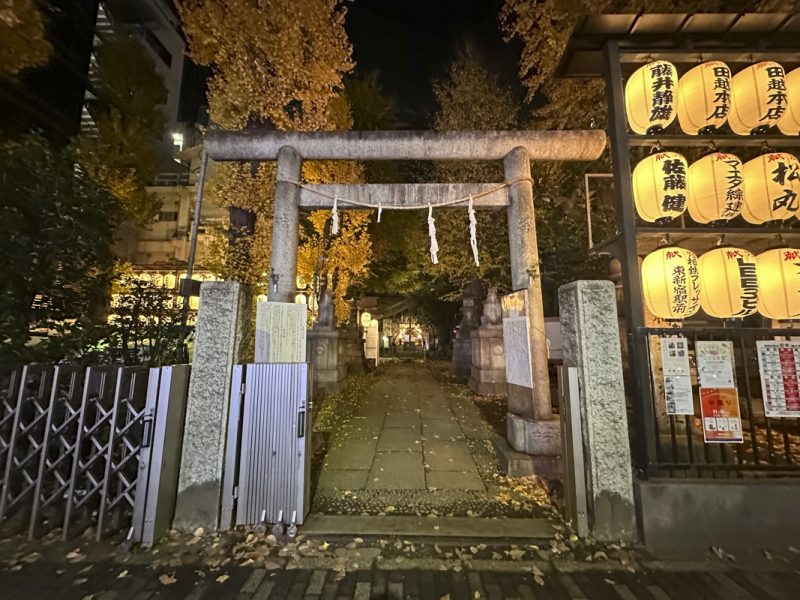
Located in Kabukicho, Inari Kio Shrine enshrines Ebisu, the god of business prosperity and good fortune.
Ebisu is traditionally depicted holding a fishing rod and a sea bream, symbols of prosperity and success. When receiving a goshuin, visitors may have the opportunity to hear explanations from the priest.
Details
- Name: Inari Kio Shrine
- Address: 2-17-5 Kabukicho, Shinjuku-ku, Tokyo
- Access: 3 minutes on foot from Higashi-Shinjuku Station
Eifukuji Temple (Fukurokuju) – Shinjuku 7-chome
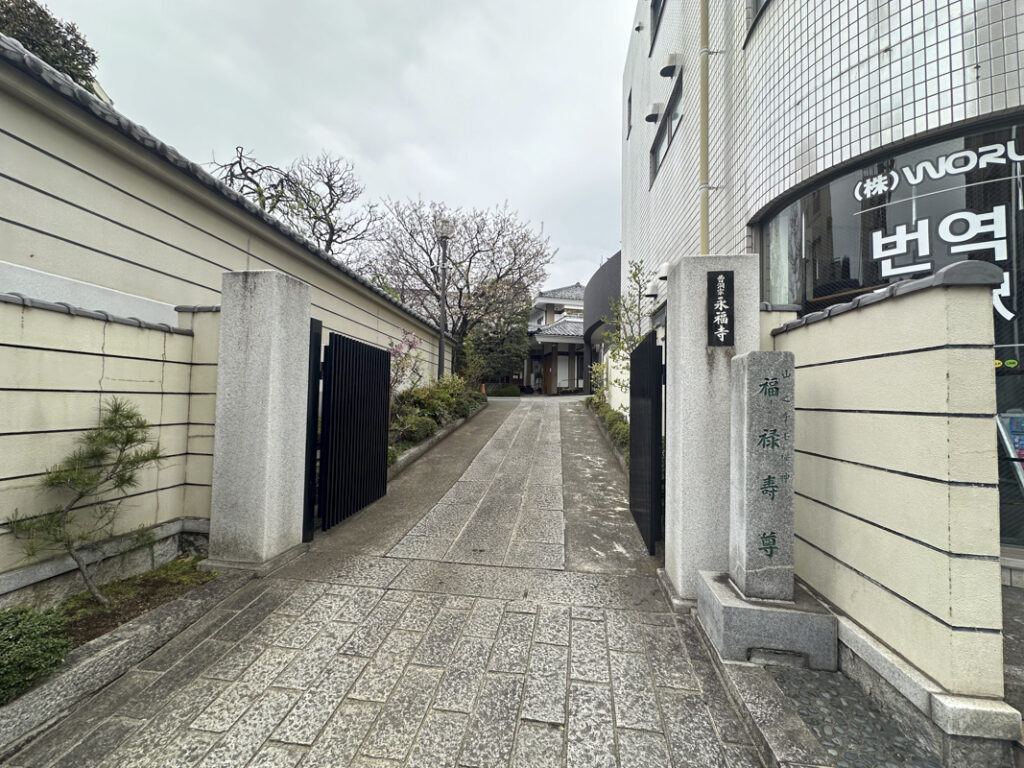
Eifukuji Temple enshrines Fukurokuju, the god of longevity, wealth, and happiness.
Fukurokuju is believed to be an incarnation of the South Star and is often depicted with a long head, accompanied by a crane or turtle.
Details
- Name: Soto Sect Okubo-zan Eifukuji
- Address: 7-11-2 Shinjuku, Shinjuku-ku, Tokyo
- Access: 7 minutes on foot from Higashi-Shinjuku Station
Itsukushima Shrine (Benzaiten) – Wakamatsukawada
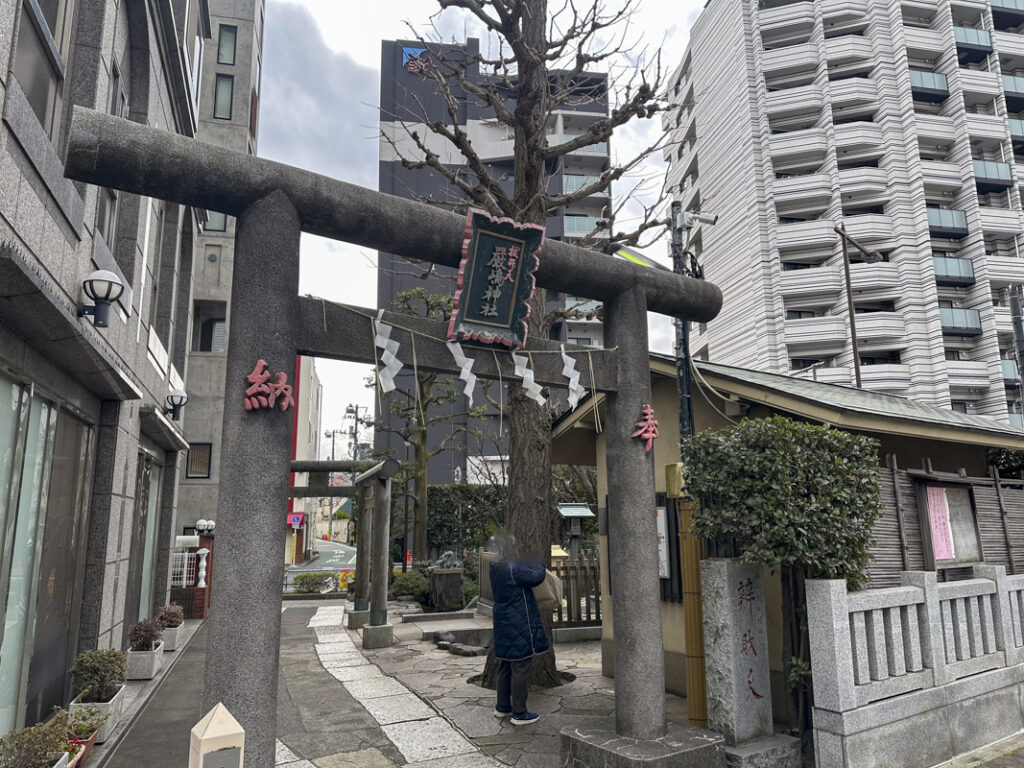
Itsukushima Shrine, also known as Nukebenten, enshrines Benzaiten, the only female deity among the Seven Lucky Gods.
Benzaiten is associated with wealth, artistic achievement, and good relationships. The shrine is unattended, so goshuin are available at the nearby Nishimuki Tenjin Shrine.
Details
- Name: Nukebenten Itsukushima Shrine
- Address: 8-5 Yochomachi, Shinjuku-ku, Tokyo
- Access: 8 minutes on foot from Wakamatsukawada Station
Hozenji Temple (Jurojin) – Shinjuku 6-chome
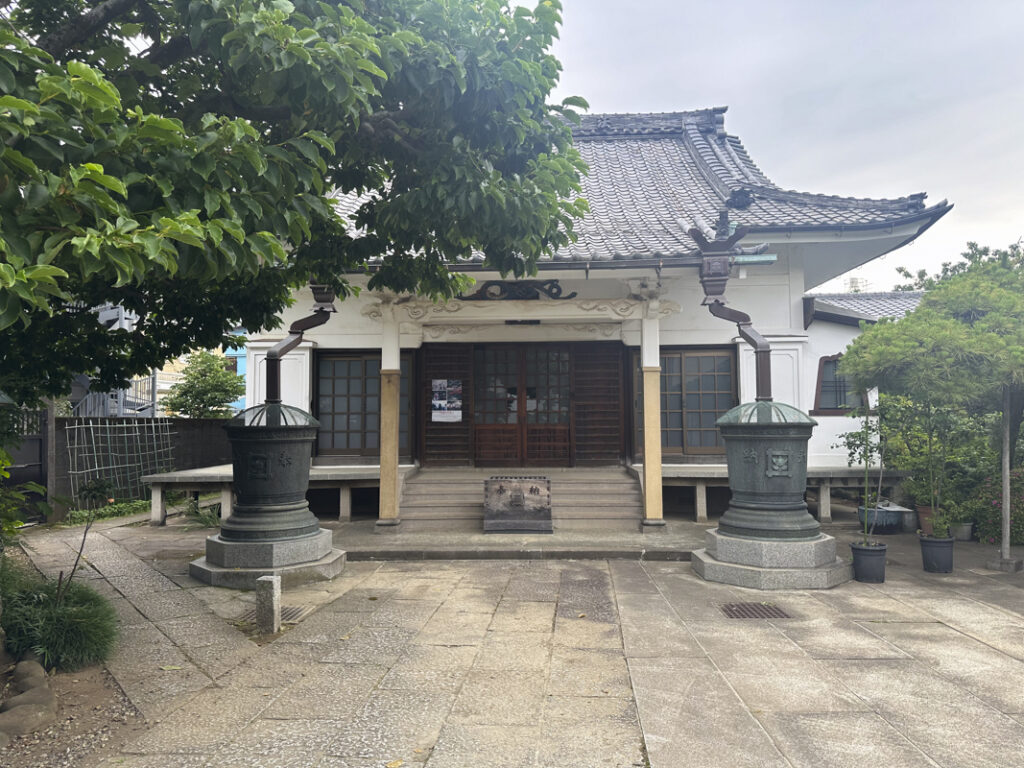
Hozenji Temple enshrines Jurojin, the god of longevity and wisdom.
Jurojin is said to carry a scroll of wisdom and a peach symbolizing long life and is often depicted alongside a deer.
Details
- Name: Shunji-zan Hozenji
- Address: 6-20-16 Shinjuku, Shinjuku-ku, Tokyo
- Access: 9 minutes on foot from Higashi-Shinjuku Station
Kyoouji Temple (Daikokuten) – Ushigome-Yanagicho
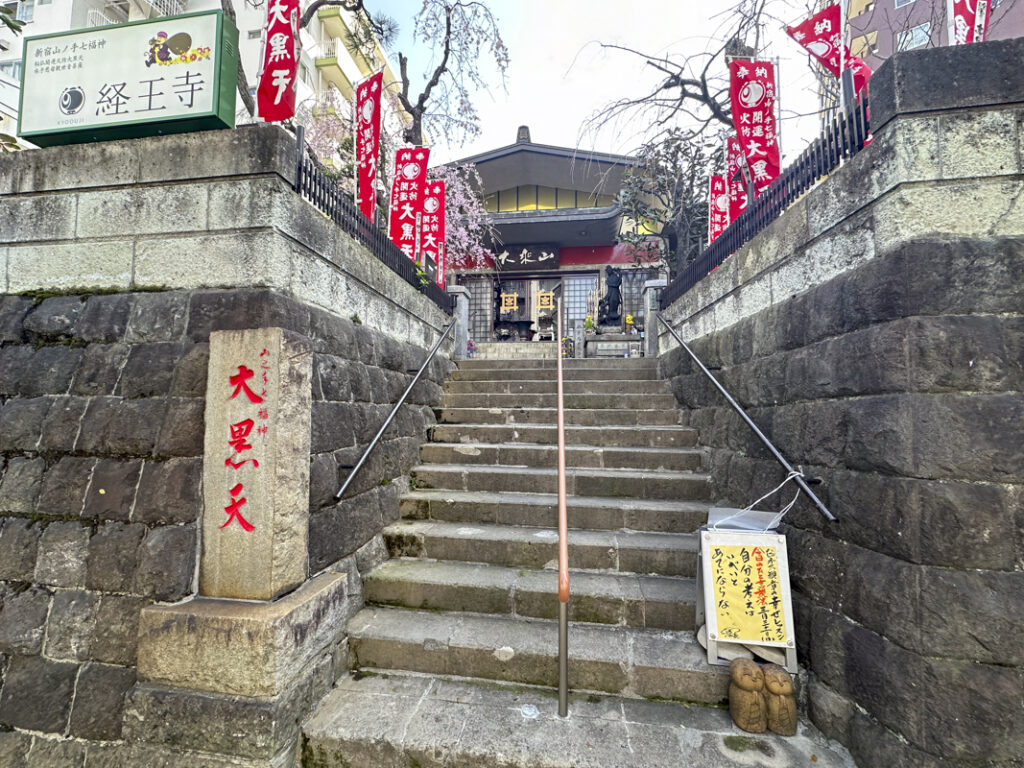
Kyoouji Temple enshrines Daikokuten, a god of good fortune and protection from misfortune.
Daikokuten is depicted wearing a hood and holding a mallet and large sack, symbolizing generosity and relief for those in need.
Details
- Name: Daijo-zan Kyoouji
- Address: 1-14 Haramachi, Shinjuku-ku, Tokyo
- Access: 1 minute on foot from Ushigome-Yanagicho Station
Zenkokuji Temple (Bishamonten) – Kagurazaka
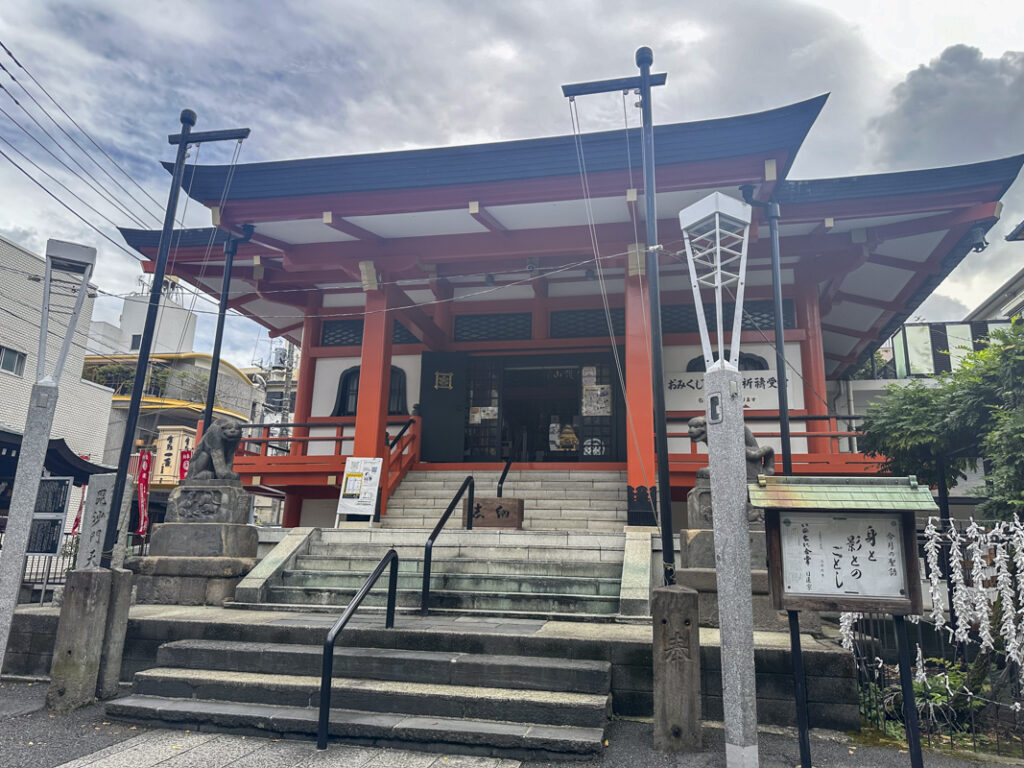
Zenkokuji Temple in Kagurazaka enshrines Bishamonten, the god of victory, prosperity, and protection.
Bishamonten is one of the Four Heavenly Kings in Buddhism and is believed to grant success and good fortune.
Details
- Name: Bishamonten Zenkokuji
- Address: 5-36 Kagurazaka, Shinjuku-ku, Tokyo
- Access: 5 minutes on foot from Ushigome-Kagurazaka Station
Suggested Route, Distance, and Time Required
The recommended walking order follows the sequence above.
The total distance is approximately 6.9 km, and the walk takes about 1 hour and 50 minutes, excluding stops.
Important Notes
- Goshuin are generally available between 9:00 AM and 5:00 PM.
- Payment for goshuin is cash only, so prepare small bills and coins in advance.
Seven Lucky Gods at Naruko Tenjin Shrine – Nishi-Shinjuku
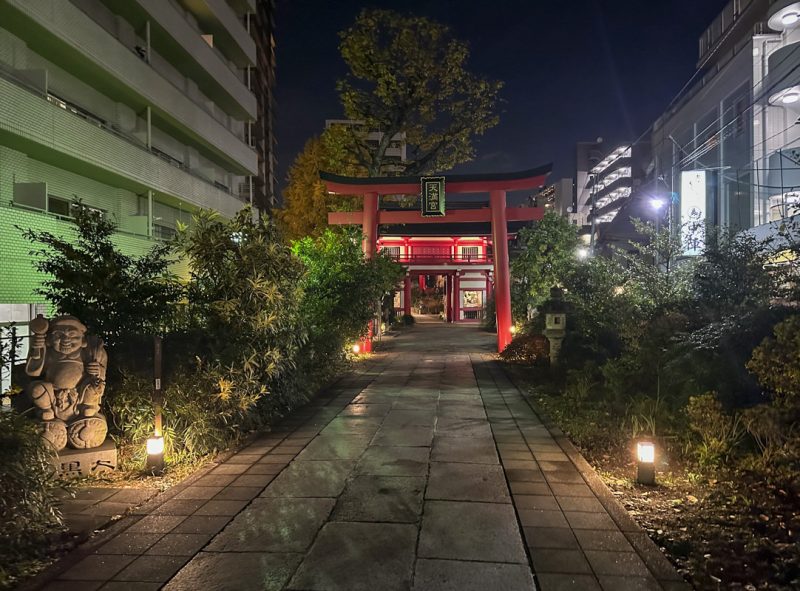
In Nishi-Shinjuku, Naruko Tenjin Shrine features stone statues of all Seven Lucky Gods within its grounds.
While no goshuin related to the Seven Lucky Gods are available here, it offers a compact alternative way to view all seven deities.
Start 2026 with the Seven Lucky Gods in Shinjuku
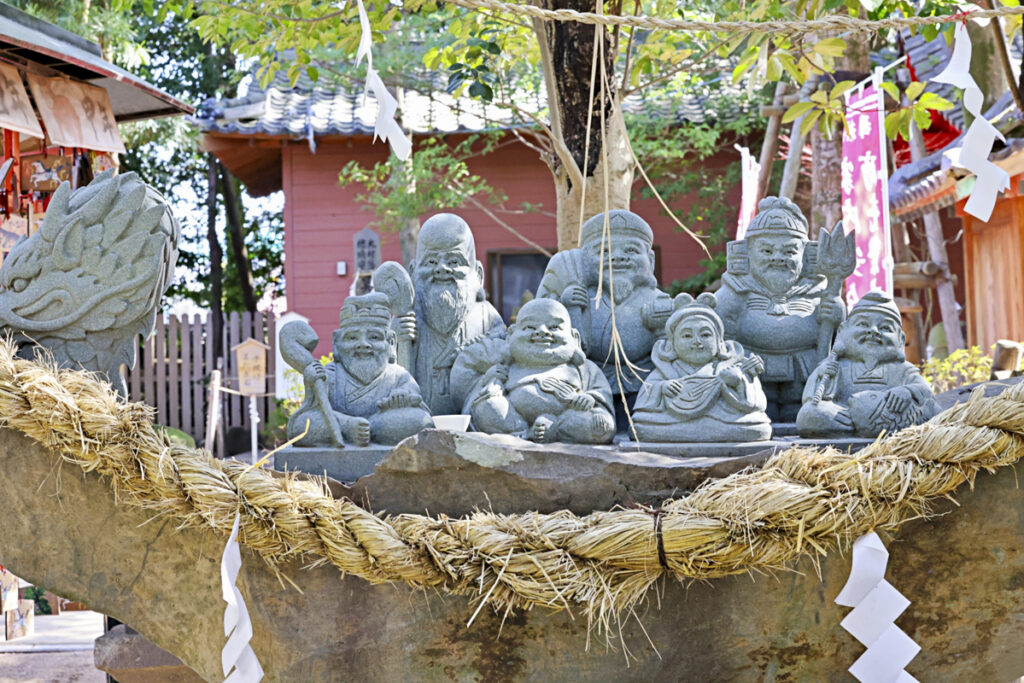
All seven sites of the Shinjuku Yamanote Seven Lucky Gods Pilgrimage are located within walking distance of stations, making the route manageable at a relaxed pace.
Walking through areas such as Shinjuku, Kagurazaka, and Kabukicho allows visitors to enjoy changing cityscapes while seeking good fortune.
As the start of 2026, this pilgrimage offers a meaningful and accessible way to welcome the new year.
Looking for the original article in Japanese?
Click here to view the Japanese version on Daily Shinjuku.
https://daily-shinjuku.tokyo/2026/01/24/shinjuku-7fukujin-meguri/